Leaving hospital can be a major milestone, but for an NDIS participant, returning home is not always as simple as walking through the front door. After surgery, illness, injury, or a lengthy hospital stay, everyday activities can suddenly feel difficult. Participants may need help with mobility, personal care, appointments, routines, or adjusting to changes in their abilities.
For families and carers, this period can also bring uncertainty. They may worry about whether their loved one will be safe at home, how they will manage daily responsibilities, and whether the right support will be available.
This is where NDIS Hospital to Home Support can make a meaningful difference.
Hospital to home support helps participants transition from the hospital back into their home or community environment with appropriate assistance. It can provide practical support during recovery while helping participants regain confidence, independence, and stability.
At Hands for Community, we understand that every participant’s transition is different. Our hospital to home transition services are designed to provide compassionate support during this important stage of recovery.
Why Returning Home After Hospital Can Feel Stressful
A hospital stay can change a person’s physical abilities, emotional wellbeing and daily routine. Even when someone is medically ready to leave, they may not immediately feel ready to manage everything independently.
Simple activities such as getting out of bed, showering, preparing meals, moving around the home, or attending follow-up appointments may become challenging.
There can also be changes to medication routines, mobility, personal care requirements, or rehabilitation needs.
For families, this can create additional pressure. A parent, partner, sibling, or carer may suddenly find themselves responsible for tasks they were not expecting to manage.
Without appropriate preparation and support, the transition can feel overwhelming.
Healthdirect explains that discharge planning creates a link between hospital treatment and the care a person needs in the community. Effective discharge planning can also help reduce complications and unplanned hospital readmissions.
What Is NDIS Hospital to Home Support?
NDIS Hospital to Home Support assists eligible participants as they move from hospital back to their usual living environment.
The type of assistance required depends on the participant’s individual circumstances, NDIS plan, and support needs. It may include practical help with daily activities, mobility, personal care, community access, and maintaining routines.
For some participants, the transition may involve returning to their family home. Others may return to Supported Independent Living (SIL), another supported environment, or a community setting.
The NDIS states that hospital discharge planning can involve supports such as personal care, support coordination, assistive technology, and home and living supports, depending on a participant’s circumstances and funding.
The goal is not simply to get someone home. It is about helping them return home safely, comfortably, and with the appropriate support around them.
How Hospital to Home Support Reduces Stress for Participants
1. Creates a Safer Transition Home
The first few days after leaving the hospital can be particularly challenging.
A participant may still feel weak or tired, have reduced mobility, or require assistance with everyday activities. Having appropriate support available can make the transition less overwhelming.
A support worker can assist with everyday tasks and help the participant settle back into their normal environment.
This can provide reassurance that they do not have to manage everything alone.
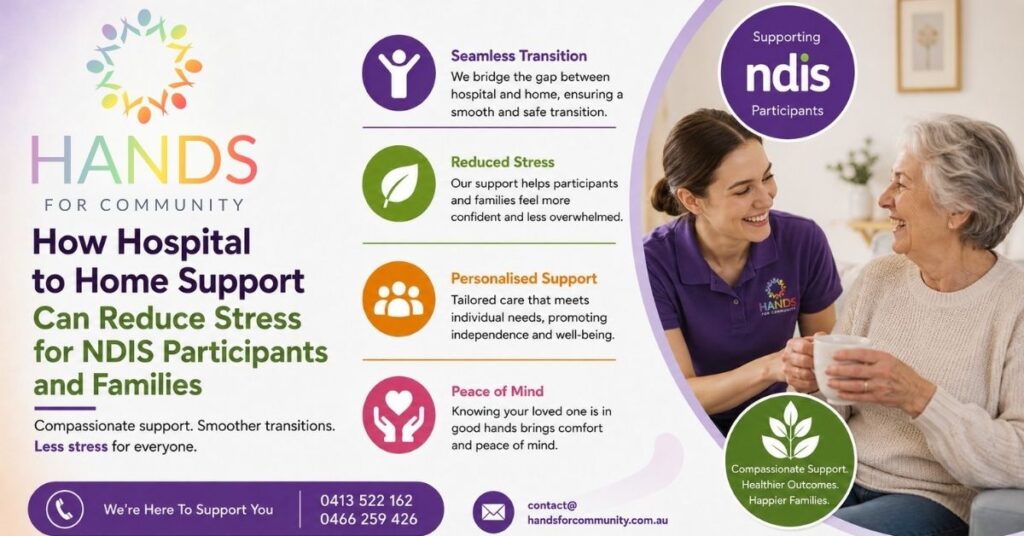
Hands for Community provides hospital to home transition support for participants returning to their homes, SIL or community settings, with assistance focused on recovery, daily living, mobility and wellbeing.
2. Helps Participants Rebuild Confidence
A hospital stay can affect a person’s confidence.
Someone who was previously independent may suddenly need assistance with showering, dressing, moving around, or completing household activities. This change can be frustrating or emotionally difficult.
Support should therefore be about more than completing tasks for a participant.
The right approach encourages participants to do what they can safely do themselves while providing assistance where needed.
Gradually, this can help rebuild confidence and encourage greater independence.
Small achievements can make a significant difference—getting safely from the bedroom to the kitchen, preparing a simple meal, attending an appointment, or returning to a familiar community activity.
3. Supports Daily Routines
Hospital life is structured around treatment and clinical care. Returning home means adjusting to a different routine.
Participants may need to re-establish regular sleeping patterns, meals, personal care, medication routines, and appointments.
A consistent support worker can help create structure around daily activities.
Hands for Community’s hospital to home services can include assistance with daily routines, medication reminders, personal care, mobility, and appointment support, depending on the participant’s needs.
Having this structure can reduce uncertainty and make each day feel more manageable.
4. Reduces the Pressure on Families
Families often want to provide as much support as possible. However, caring for someone after hospitalisation can become physically and emotionally demanding.
A family member may have work, children, household responsibilities, and their own commitments. Suddenly becoming the primary source of support can create stress for everyone involved.
NDIS Hospital to Home Support can provide an additional layer of assistance.
Instead of families feeling that they must manage every task themselves, support workers can assist with appropriate day-to-day activities.
This allows family members to continue being loved ones rather than feeling that they must take on the role of full-time carers.
5. Provides Support With Mobility and Personal Care
Reduced mobility is common after certain illnesses, injuries, surgeries and hospital stays.
Participants may require assistance moving around their home, transferring between surfaces, getting dressed or maintaining personal hygiene.
These tasks can be uncomfortable or intimidating when someone is recovering.
Appropriate disability support can help participants complete daily activities with greater dignity and confidence.
Hands for Community provides assistance with mobility, transfers, personal hygiene, dressing, grooming and other everyday activities as part of its transition support services.
6. Makes Appointments and Community Access Easier
Hospital discharge often means the participant has follow-up appointments, therapy sessions or rehabilitation activities to attend.
For someone recovering from illness or injury, travelling to these appointments may not be easy.
Hospital to home support can assist participants with community access and attending relevant appointments, where this falls within their funded supports.
Having someone available to help can reduce the stress associated with organising transport, preparing for appointments and getting safely to and from the destination.
Over time, this can also help participants reconnect with their community and return to activities they enjoy.
How Hospital to Home Support Helps Families Emotionally
The benefits are not limited to the participant.
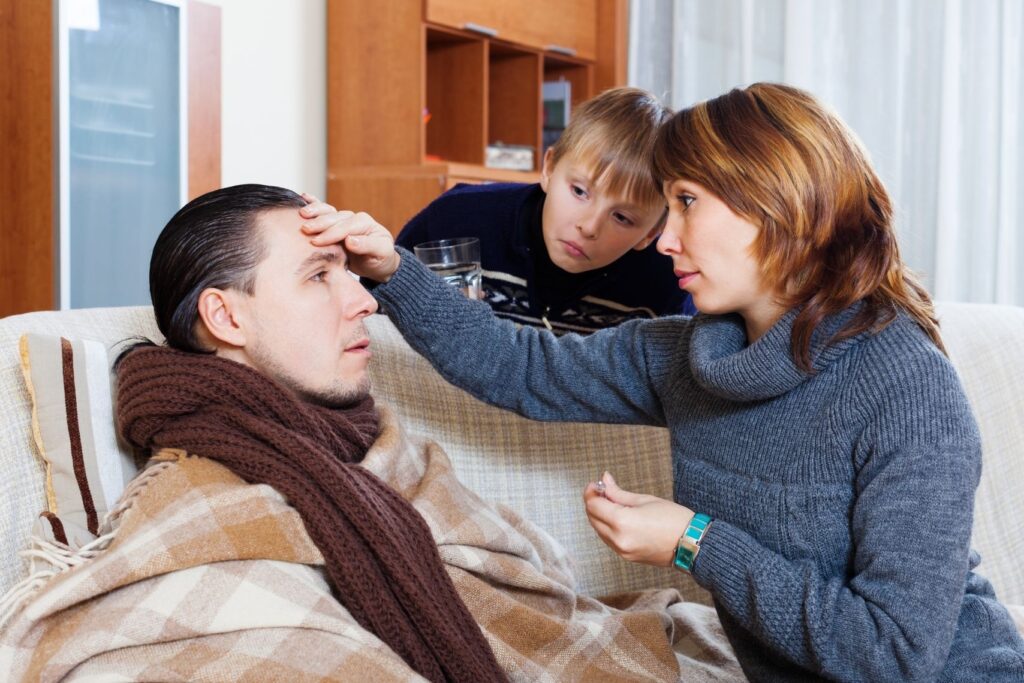
Families can experience considerable anxiety after a loved one comes home from hospital.
Questions may include:
- Will they be safe when no one is around?
- Can they manage their daily routine?
- Do they need help with personal care?
- Will they remember their medication routine?
- How will they get to follow-up appointments?
- What happens if their support needs change?
Having an appropriate support system can provide reassurance.
Families can feel more confident knowing their loved one has assistance with relevant daily activities and that their recovery is being supported in a structured way.
This does not remove every concern, but it can reduce the feeling that the family has to manage everything alone.
Good Communication Is an Important Part of the Transition
A successful hospital-to-home transition requires communication between the participant, family, hospital team, support providers and other relevant professionals.
The NDIS recommends that participants let hospital staff know they are NDIS participants. With consent, hospital staff can provide information to the NDIS to help plan appropriate supports for the person’s return home.
The NDIS also has Hospital Liaison Officers who work with hospitals and participants to understand support needs when a participant is preparing to leave hospital.
For disability support providers, understanding changes in a participant’s needs is also important.
A participant’s requirements after hospitalisation may not be exactly the same as they were before admission. They may temporarily require additional assistance with mobility, personal care or daily activities.
Clear communication helps everyone understand what support is required and when it should be provided.
Supporting Independence Instead of Taking Over
One of the most important aspects of NDIS Hospital to Home Support is maintaining the participant’s independence.
Support should not mean taking away control.
Instead, support workers can encourage participants to participate in tasks wherever they can safely do so.
For example, a support worker may assist with preparing a meal while allowing the participant to choose what they want to eat. They may provide assistance with getting dressed while encouraging the participant to complete the parts they can manage independently.
This approach helps maintain dignity, choice and control.
Over time, these small opportunities can contribute to greater confidence in everyday life.
When Might a Participant Need Hospital to Home Support?
Hospital to home support may be particularly helpful following:
- Surgery or medical procedures
- An injury or accident
- A prolonged hospital admission
- Changes in mobility
- Physical illness
- Changes in daily living abilities
- Rehabilitation following hospitalisation
- Changes in personal care requirements
- A transition back to SIL or another supported environment
The exact supports required will depend on the participant’s individual situation and NDIS funding.
It is important to discuss changing support needs with the appropriate NDIS contacts, support coordinator and healthcare professionals where relevant.
Choosing the Right Hospital to Home Support Provider
The transition home is personal. Participants and families should feel comfortable with the people providing their support.
When choosing a provider, consider whether they:
- Understand the participant’s individual needs
- Respect personal choices and preferences
- Communicate effectively with families and relevant professionals
- Support independence rather than creating unnecessary dependence
- Can provide flexible support when appropriate
- Understand the challenges associated with returning home after hospitalisation
- Treat participants with dignity and respect
A supportive relationship can make the transition feel much less intimidating.
Making the Journey Home Less Stressful
Coming home after hospital should be a positive step towards recovery, not a source of constant anxiety.
For NDIS participants, the right support can make everyday tasks more manageable while helping them regain confidence and independence. For families, it can provide reassurance and reduce the pressure of managing every aspect of recovery alone.
Hands for Community provides compassionate Hospital to Home Transition Support for NDIS participants in Sydney. Our team supports participants with daily living, mobility, personal care, community access, routines, and recovery-related needs, helping make the transition from hospital to home more comfortable and organised.
If you or someone you care about is preparing to leave the hospital and needs additional support at home, Hands for Community can help you understand the available support options and take the next step towards a smoother transition.